Day 1: Meeting in Ouarzazate
Arrival at Ouarzazate airport and transfer to your accommodation.
Overnight stay in a hotel.
Day 2: First Gallops
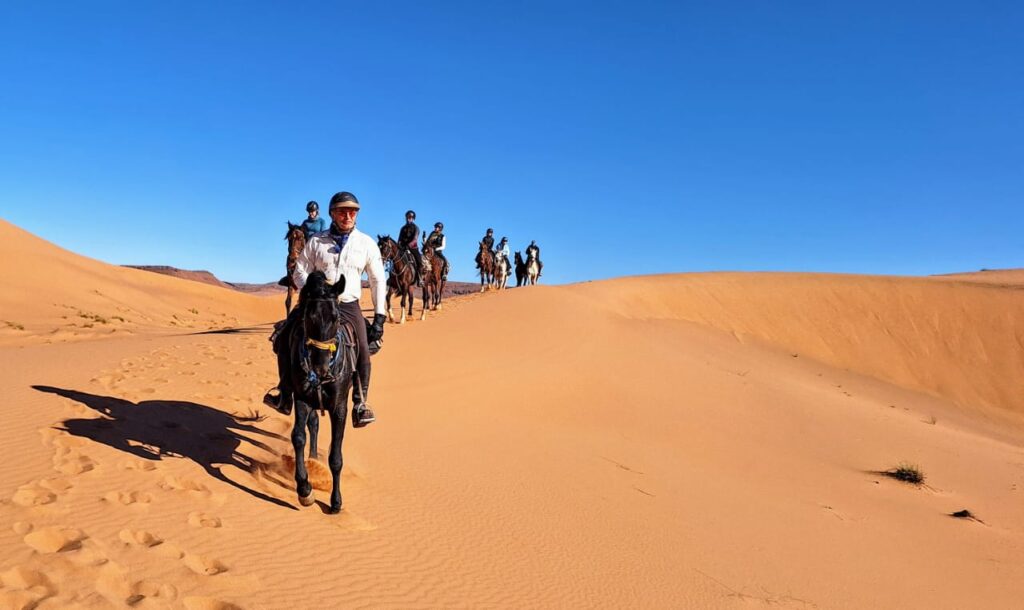
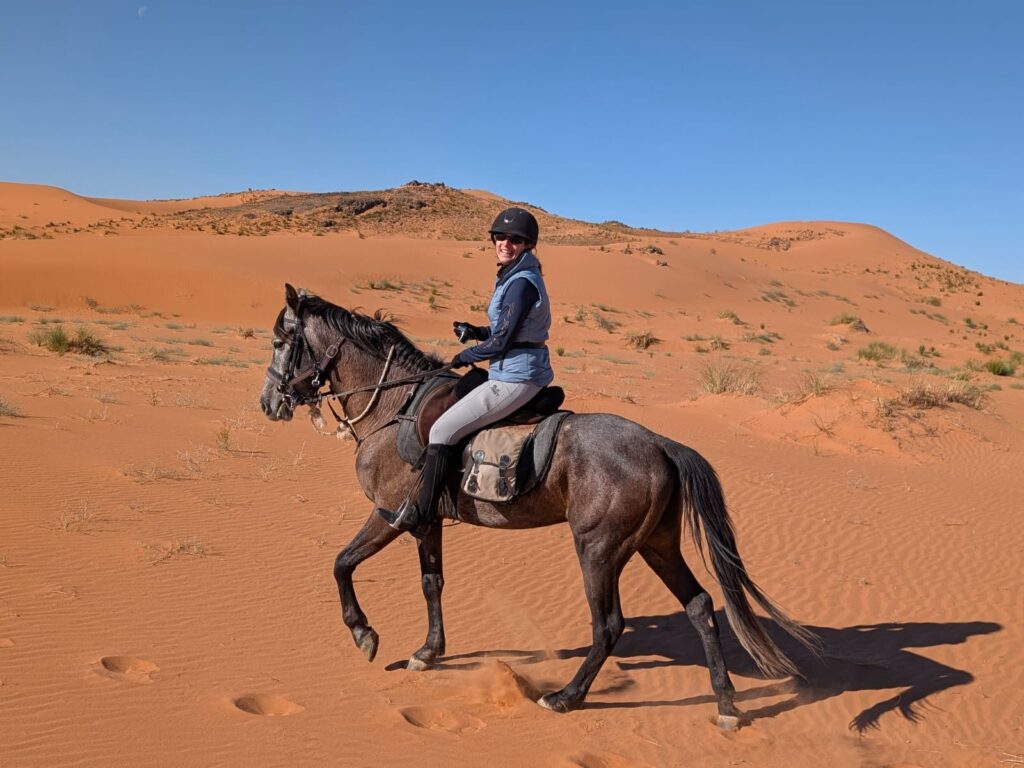
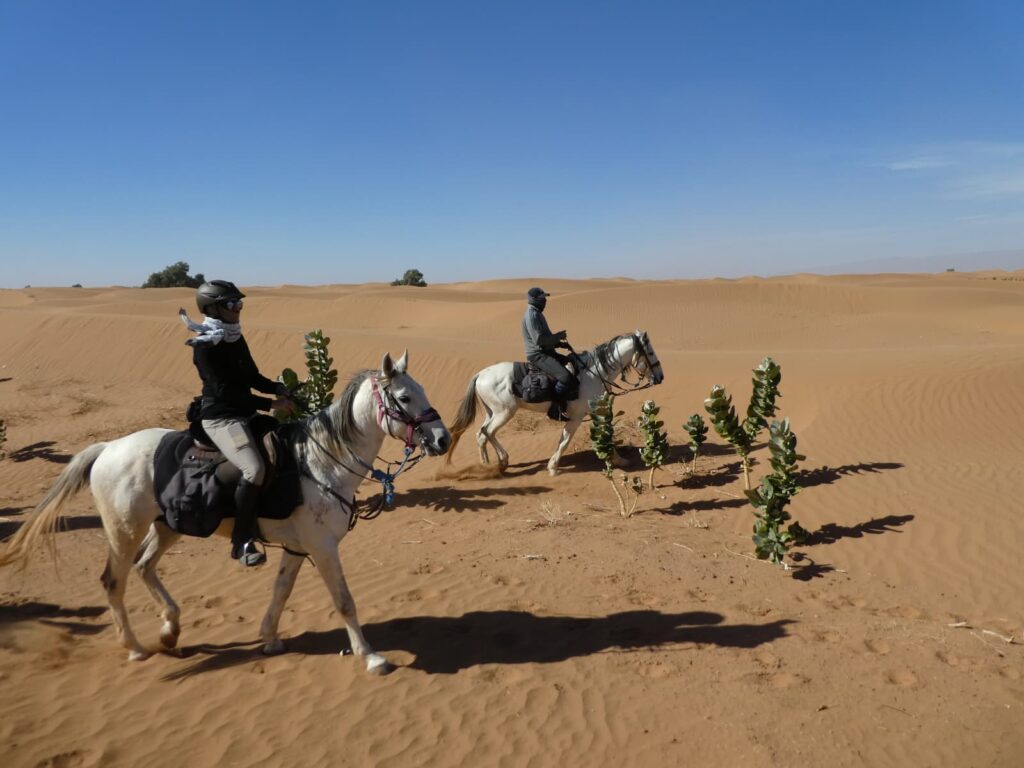
We take the road that crosses the Djebel Saghro (volcanic massif) to descend the Draa Valley and reach our meeting point with the team and horse assignments. A short refresher course. The horseback ride begins southwest, on easy terrain through beautiful little valleys.
We pass through the tamarisk trees, past the Mouzmou well, then leave the dunes to cross a reg, a completely different aspect of the desert, more austere, more rugged. For the bivouac
Horseback riding time : 3 hours.
Accommodation: Bivouac.
Meals included: breakfast, lunch, dinner
Day 3: Nesrate
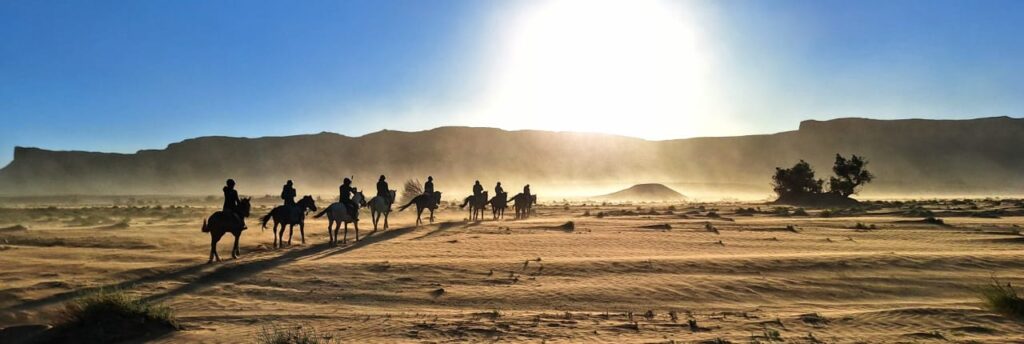
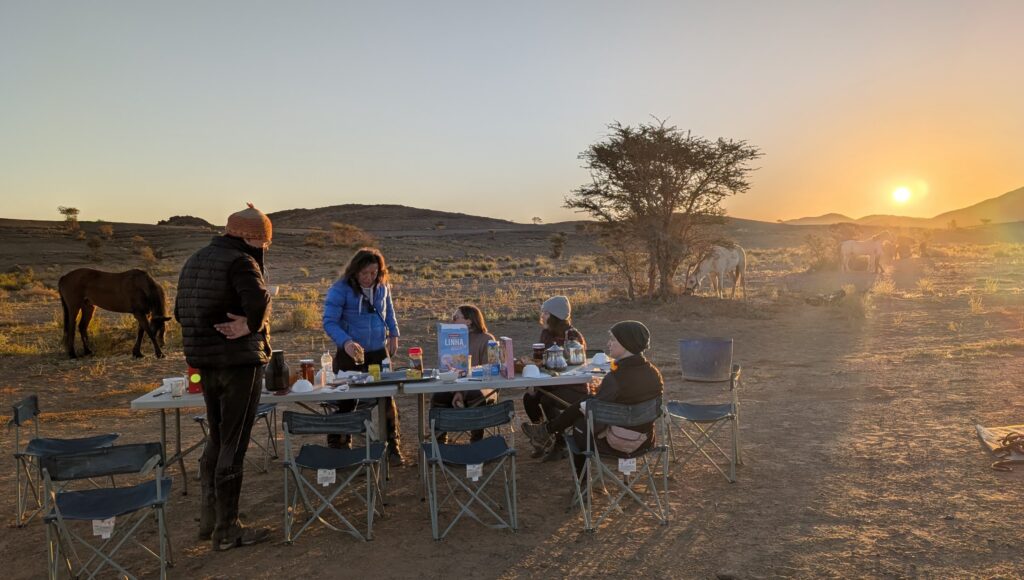
At sunrise, breakfast and preparation of the horses before setting off into the first desert landscapes. The day alternates between sand, hills and vast wild expanses, with a lunch break in the shade of a tamarisk tree.
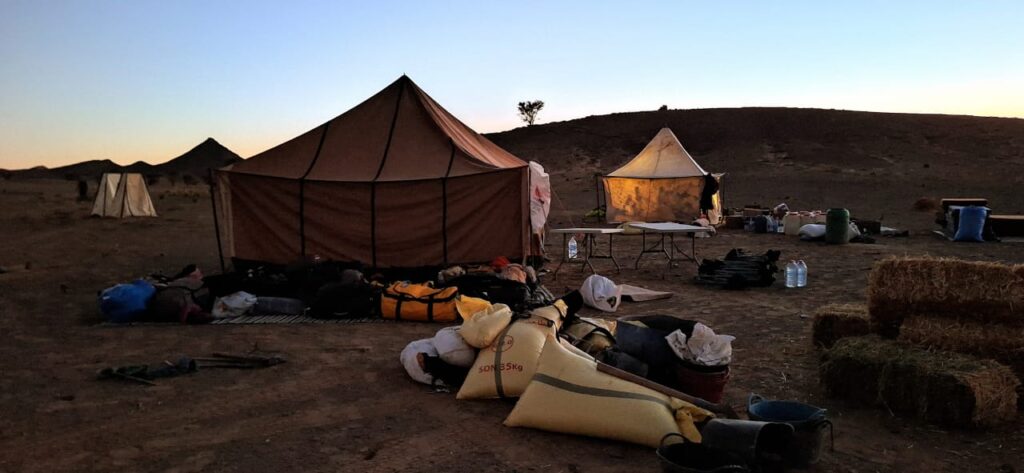
In the late afternoon, we reach a stunning canyon where we set up camp. We enjoy a convivial dinner around the campfire and spend the night under a starry desert sky.
Meals included: breakfast, lunch, dinner.
Accommodation: bivouac.
Riding time: 5 hours.
Day 4: Plateaus & Dunes
This morning we set off again towards new landscapes, between mineral plateaus, discreet canyons and panoramic views opening onto the vastness of the desert. Lunch is taken in the shelter of a natural recess, chosen according to the whims of the wind and sun.
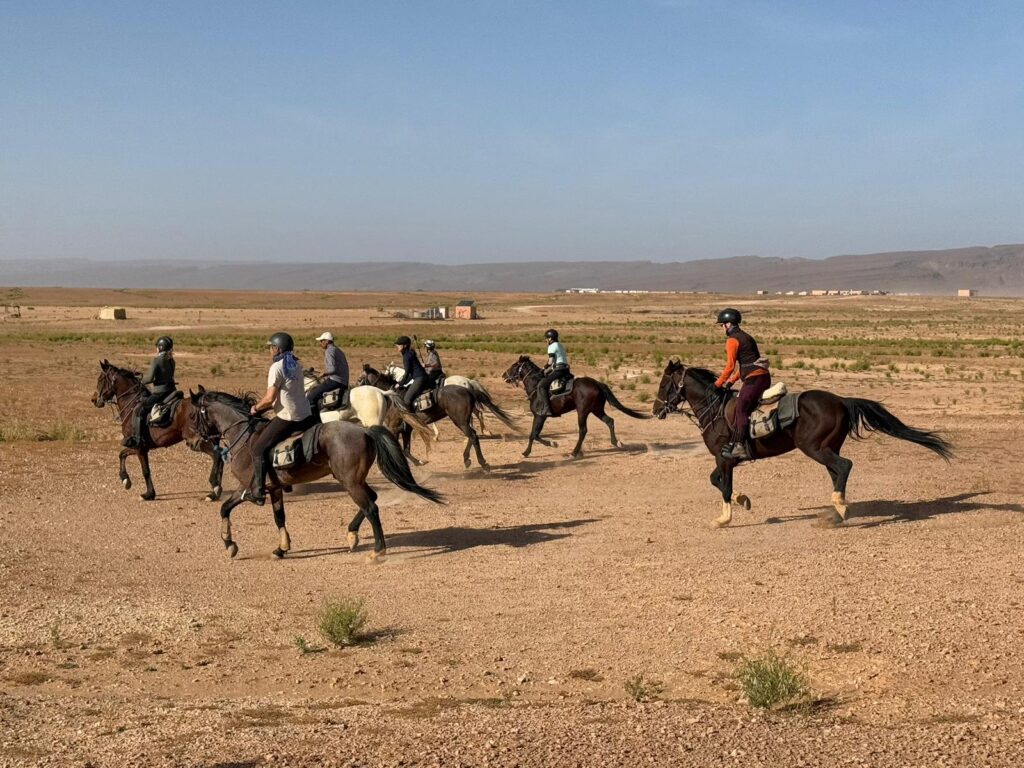
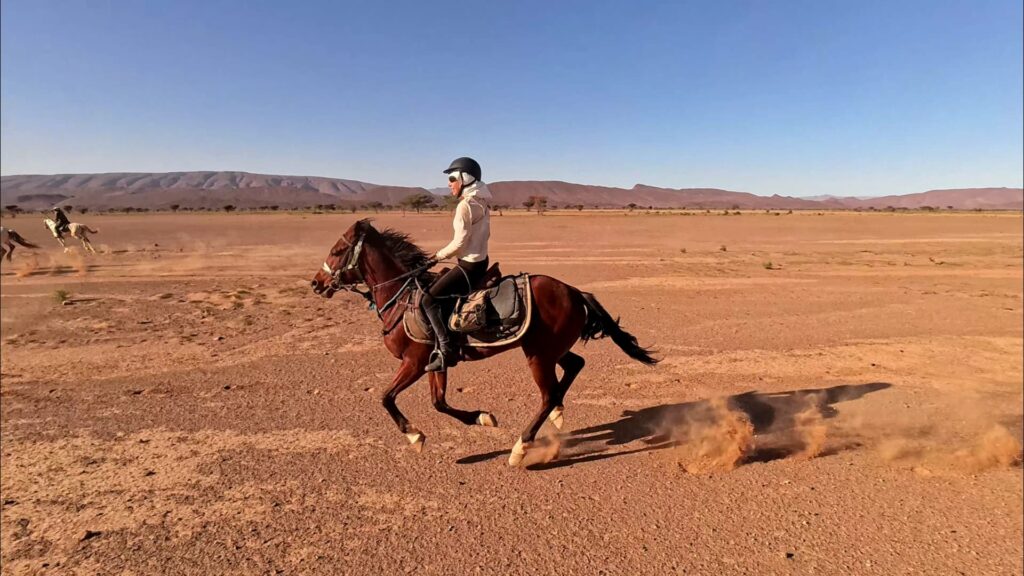
In the afternoon, we ride across vast plains, ideal for a good pace, before stopping at a well to refresh the horses. Our evening camp awaits us a little further on, nestled among tamarisk and spurge trees.
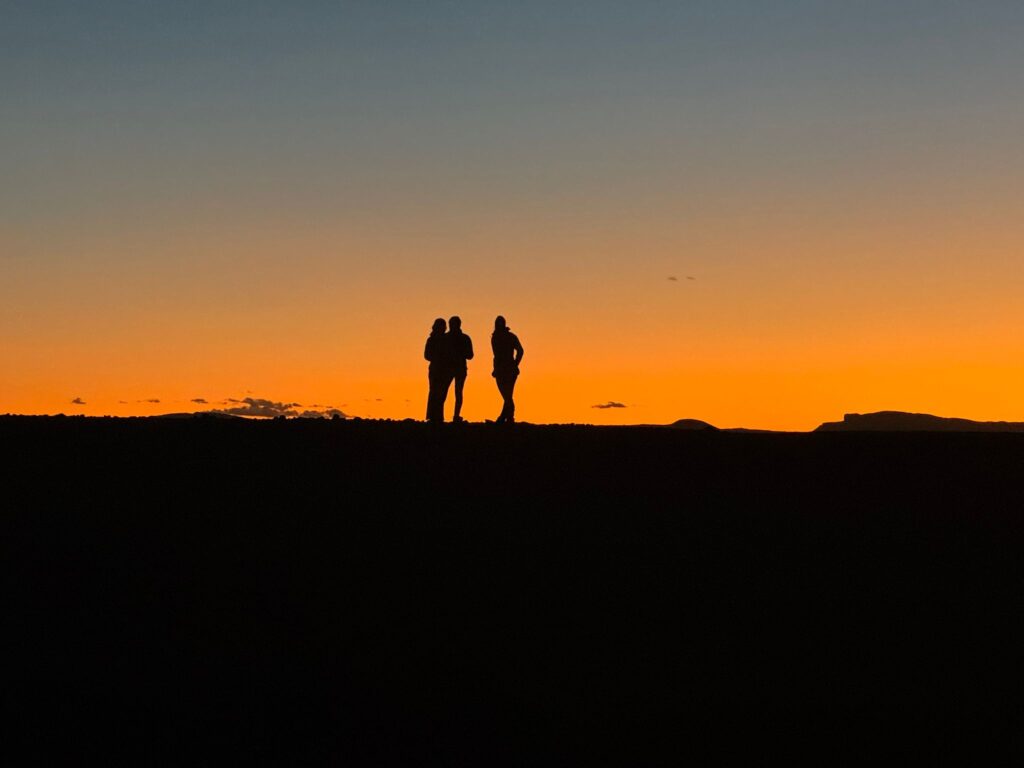
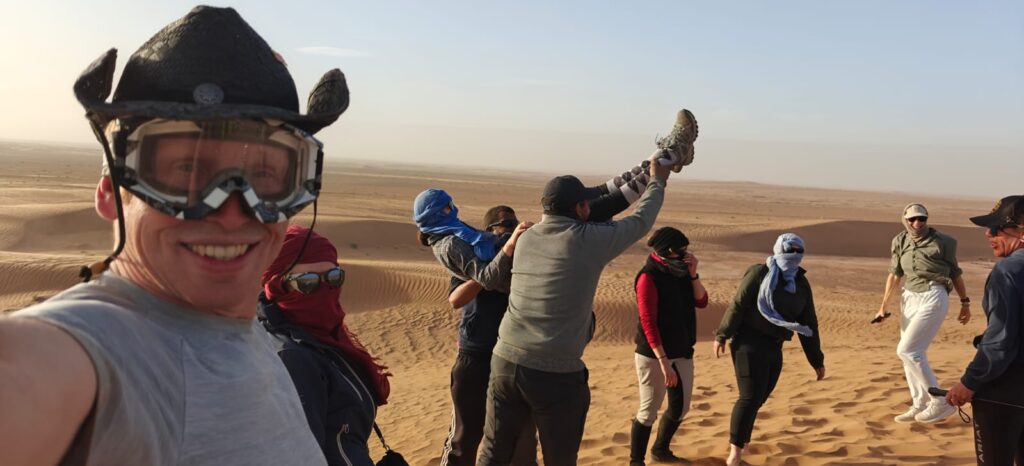
In the last rays of sunlight, a walk to the highest dune offers a magical and unforgettable moment.
Riding time: 5 hours
Accommodation: Bivouac
Meals included: breakfast, lunch, dinner
Day 5: Erg & isolated dunes
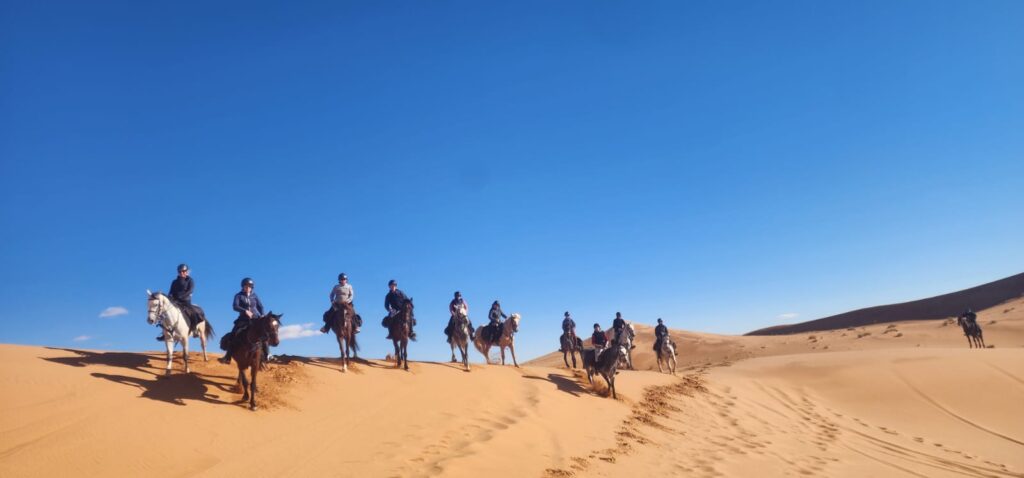
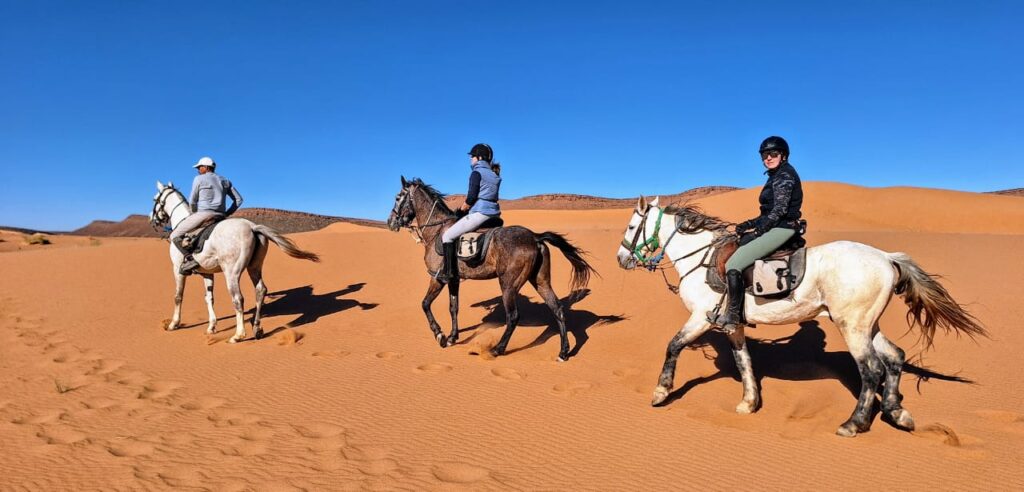
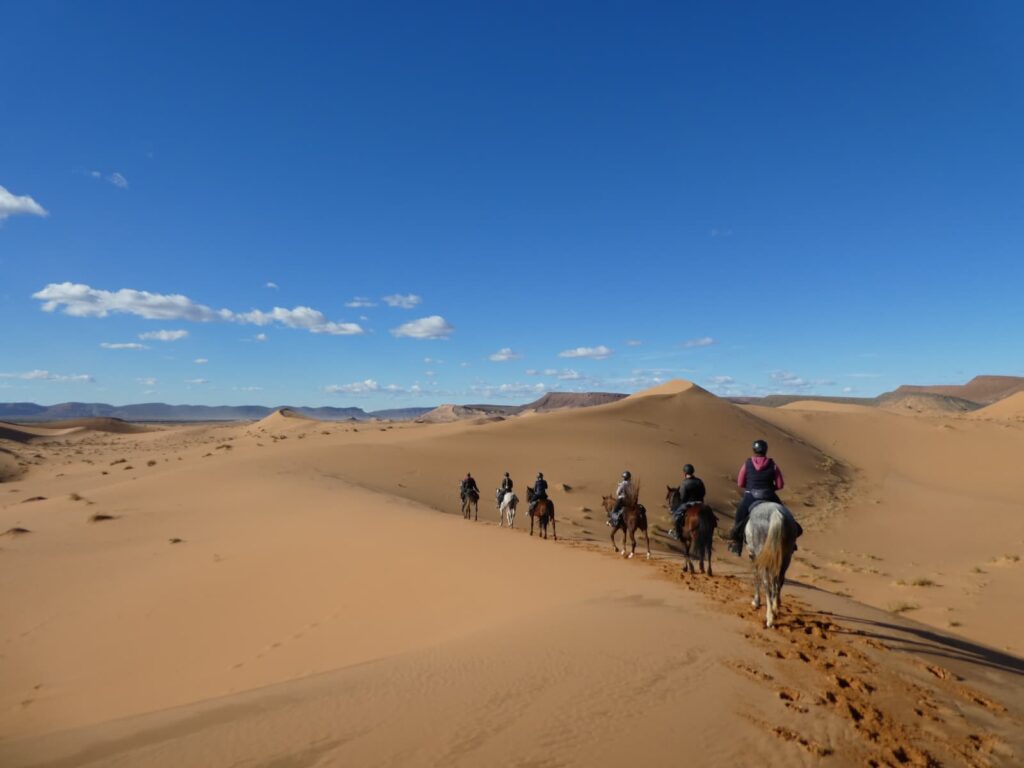
An early breakfast in the heart of a bivouac overlooked by the Erg Chegaga, before venturing into a living desert: isolated dunes, tamarisk, euphorbia, acacia, and pastures create a unique landscape. We make a few forays into the dunes, the horses moving with ease on the sandy slopes.
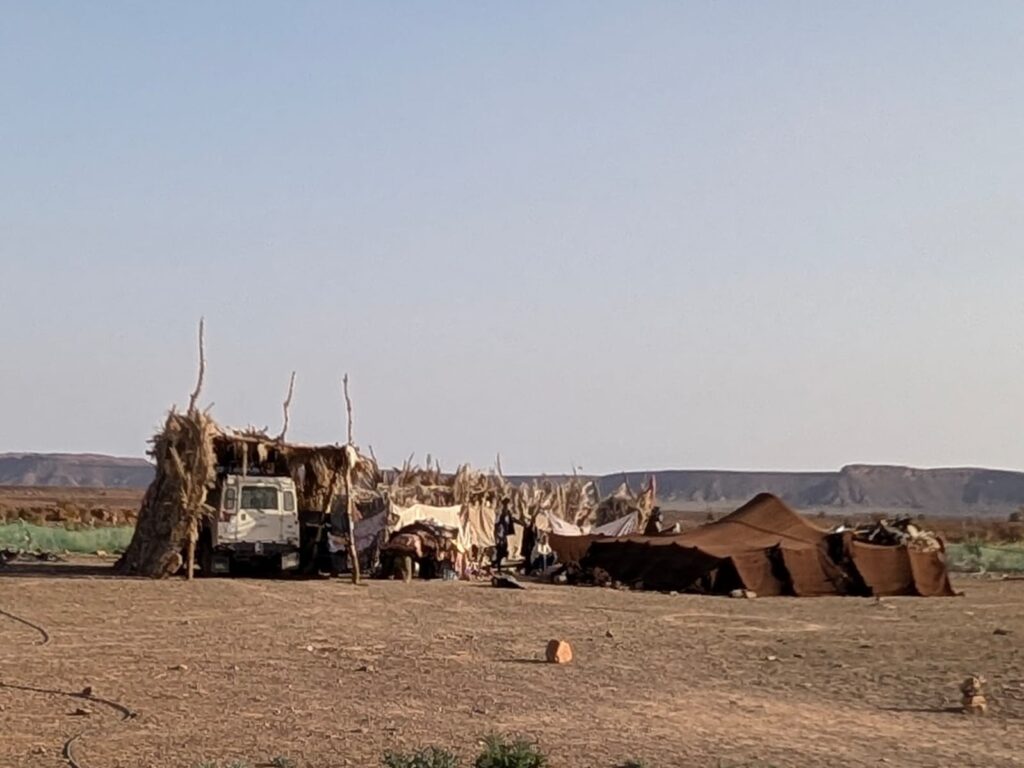
The day unfolds at the rhythm of a wild sea of sand, sometimes crossed by nomadic encampments and punctuated by a break in the shade of a tamarisk tree.
At the end of the day, we reach our bivouac nestled in the heart of a vast sand basin. Dinner and overnight stay in the middle of the desert, under a pristine sky.
Meals included: breakfast, lunch, dinner
Accommodation: Bivouac
Horse riding time: 6 hours
Day 6: The Iriki Plain
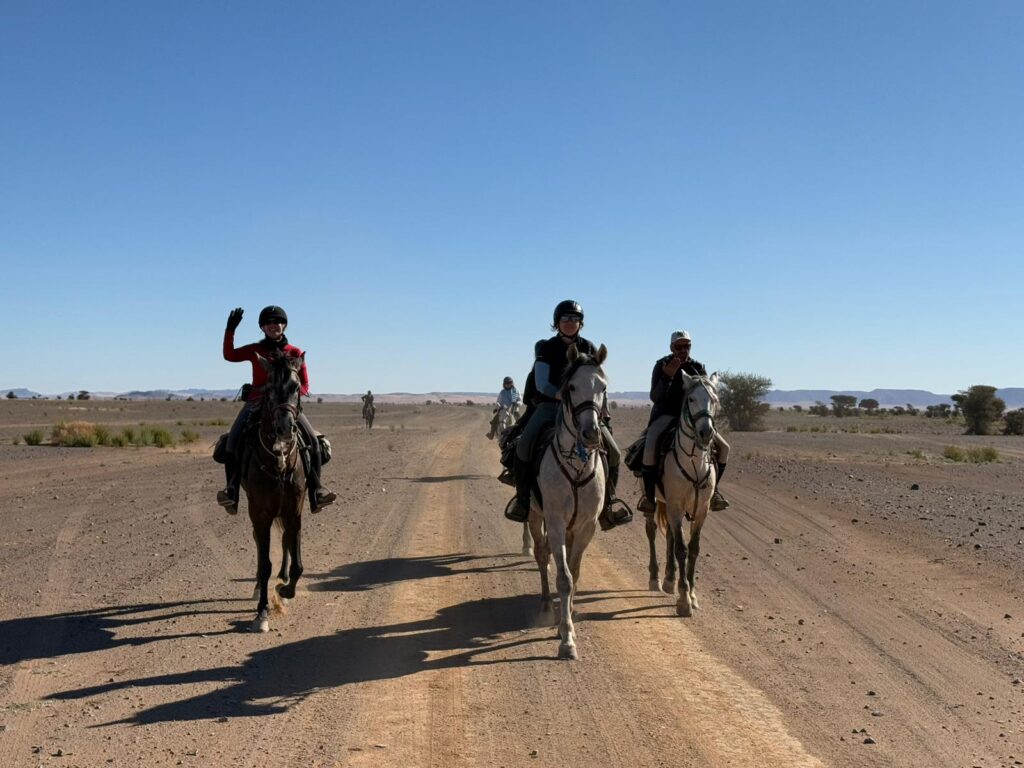
An early start, breakfast, then a visit to the well for the horses before heading west towards the vast plain of Iriki, a former lake now completely dried up. This perfectly flat expanse stretches as far as the eye can see, offering long rides in a timeless setting.
We picnic in the sparse shade of a few acacia trees, then set off again across plateaus and valleys dotted with ancient fossils. At the end of the day, the M’Douar mountains appear on the horizon and guide us to our bivouac, set up not far from a well.
Meals included: breakfast, lunch, dinner.
Horseback riding time: 6 hours.
Accommodation: BIVOUAC
Day 7: Return to Ouarzazate
The final major stage is superb and incredibly varied. Early risers can admire a spectacular sunrise over the mountains before departure. We travel across a vast steppe, between small, vegetated dunes and paths frequented by nomads and their herds, until we reach a well hidden in the middle of the desert.
The landscapes become more magnificent as we approach the two M’Douar massifs, whose shapes are reminiscent of American canyons. We then follow the cliffs, where a few palm trees find refuge in the rock.
A day full of contrasts before the transfer to Ouarzazate.
Meals included: breakfast, lunch, dinner.
Accommodation: 3-star hotel.
Day 8: Final moments
Transfer to Ouarzazate airport
Travel time: 20 minutes (5 km)
Meals included: breakfast
EQUESTRIAN SKILLS AND PHYSICAL FITNESS
Minimum technical requirements:
Perfect mastery of all three gaits outdoors and in open terrain: posting trot, cantering in balance and in a group, maintaining control of the horse (distance, direction) at faster gaits with a light hand. Minimum academic equivalent of Galop 4.
Riders over 90kg and over 1.95m must contact us before registering.
Gaits
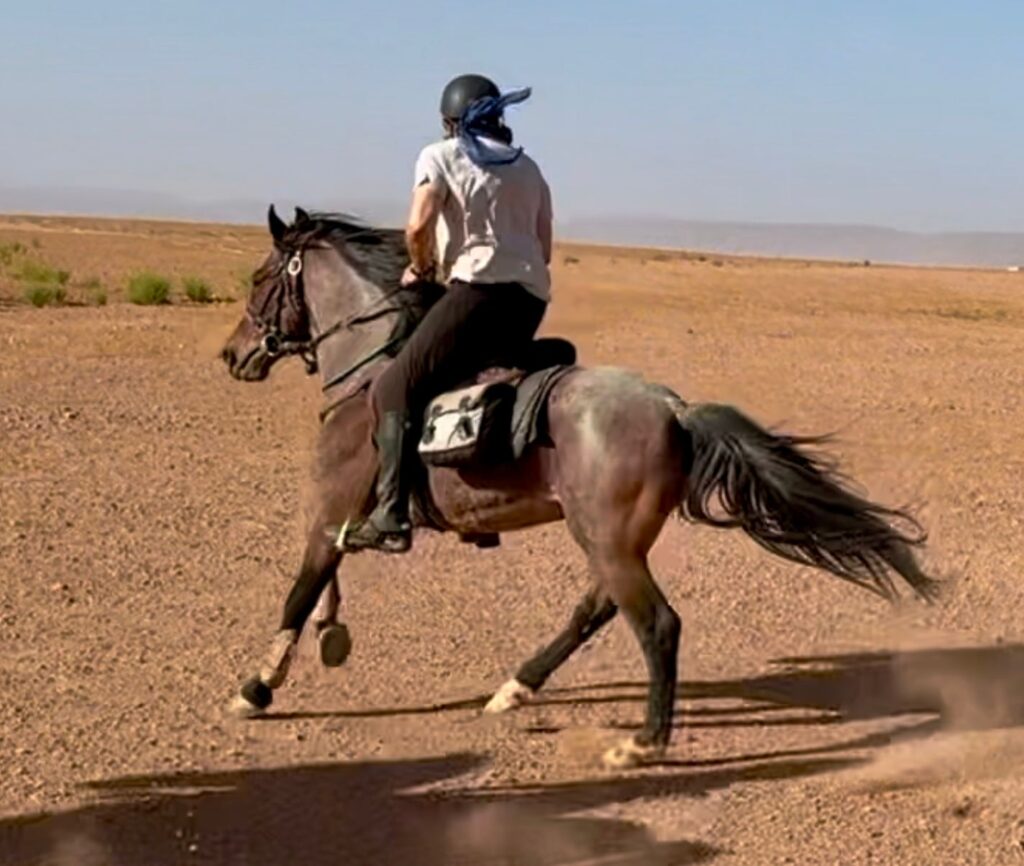
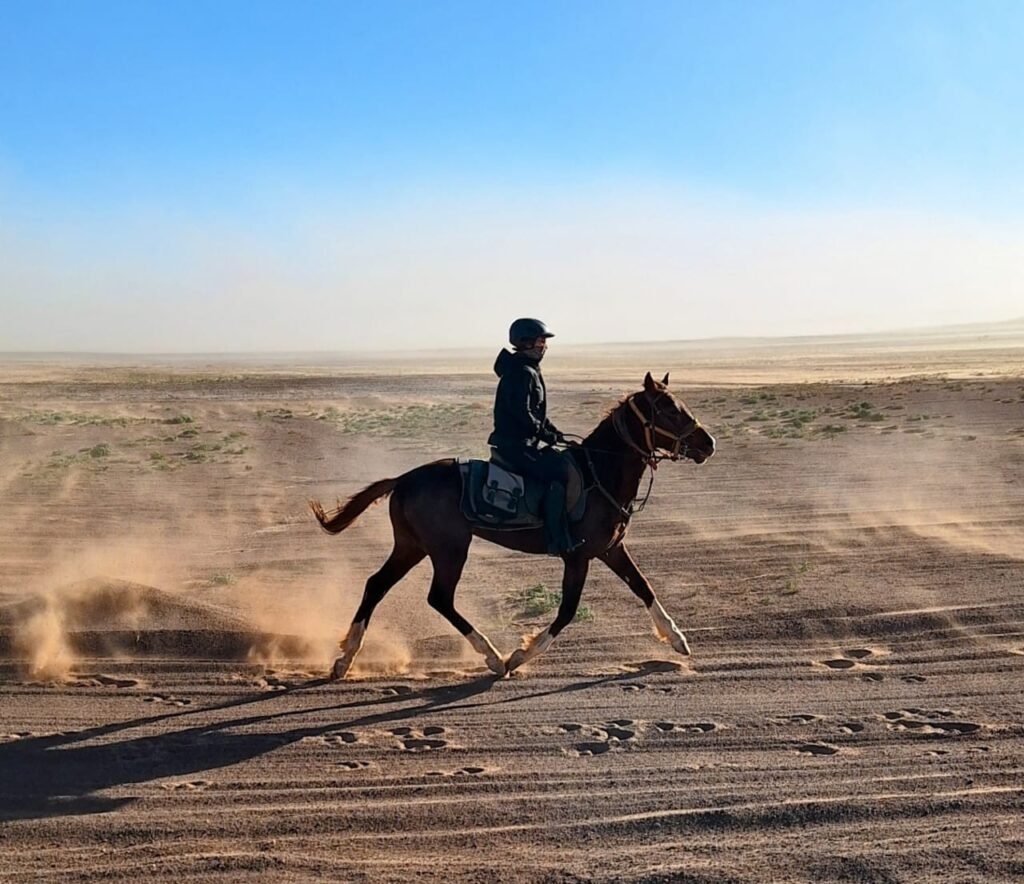
The basic pace of this horseback riding trip is the walk. There are good, steady trots and numerous canters each half-day: from a collected canter to free-flowing, but always controlled, gallops when the terrain allows. The endless stretches of hard-packed sand are ideal for good canters. There are some rocky and steep sections (along the wadis) where a walk and good balance are essential.
Please note that all canters are always done in a straight line due to the temperament of the stallions.
Self-reliance and participation are required.
Everyone’s participation is required to groom, saddle, bridle, and unsaddle their horse. Participation is also expected for camp tasks, including setting up and taking down tents. You can also participate in horse care (feeding and watering) if you wish.
Required skill level and experience.
A good level of fitness is required for this horseback riding tour, which presents no particular difficulties. The temperate climate is especially pleasant from June to October. The region is enjoyable year-round, tempered by cold sea currents. Short periods of inclement weather (thunderstorms) may occur.
Experience with multi-day horseback riding is a plus, but not required. Riders who do not ride regularly should definitely get back in the saddle before the ride.
Going out to meet different cultures and mentalities implies an acceptance of these differences… and respect for them.
The best season for this trip?
October to May is the ideal time.