
India: Beauty and wilderness of Kutch on Marwari horses


Styles
• Trail Riding, Point to Point Trails
• Guided tour
• Package program
• Base camp ride
• Solo-riders, families, couples and teens
Key information
• 9 days/ 8 nights / 7 days horseback 40-45 km per day
• Rider Weight Limit: 90 kilograms / 198 pounds
• Horse Height Range: 15 hands
• Tack Type: English tack
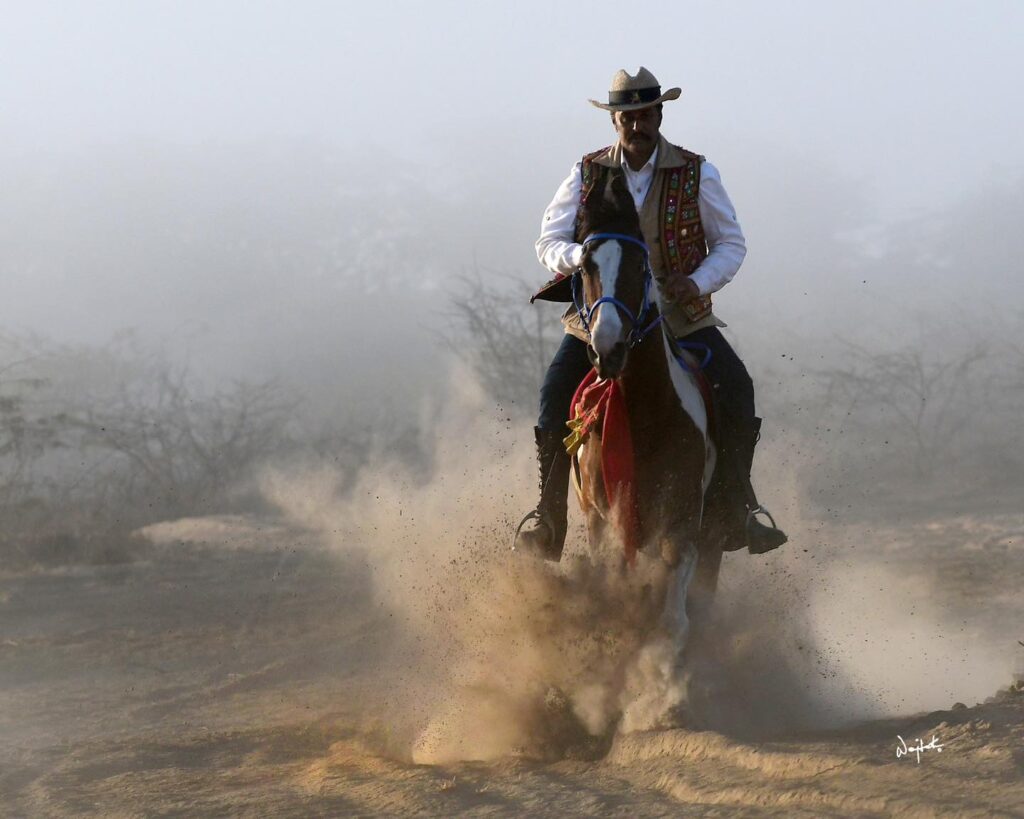
• Horse Breed: Marwari, Local crosses
• Local English-speaking guides and grooms
Highlights
• 2 nights accommodation in Heritage Hotels (Castle / Palace / Ancient forts)
• Visits to traditional villages where you can experience the work of the local artisans, bhungas (traditional mud houses)
• 2 nights accommodation in luxury resort camp in White Desert
• Visit to Rann which is the home for more than 300 species of birds, wildlife sanctuaries
• A ride on the beach will allow the riders to view and experience the beauty in the water of Kutch
• Sunrise in the desert
CHECK AVAILABILITY AND PLAN YOUR DREAM TRIP!
- You will be requested to confirm your riding skills
- Solo traveler are welcome with the same price
- Some groups can count up to 30 riders. You should be confident in a big group
- Suitable for teens of 12 years old (younger participants are allowed with parents)
- Dates are planned to catch national events and holidays
- Best rural India exploration program
- You are supposed to bring your helmet
- Language of instruction: English
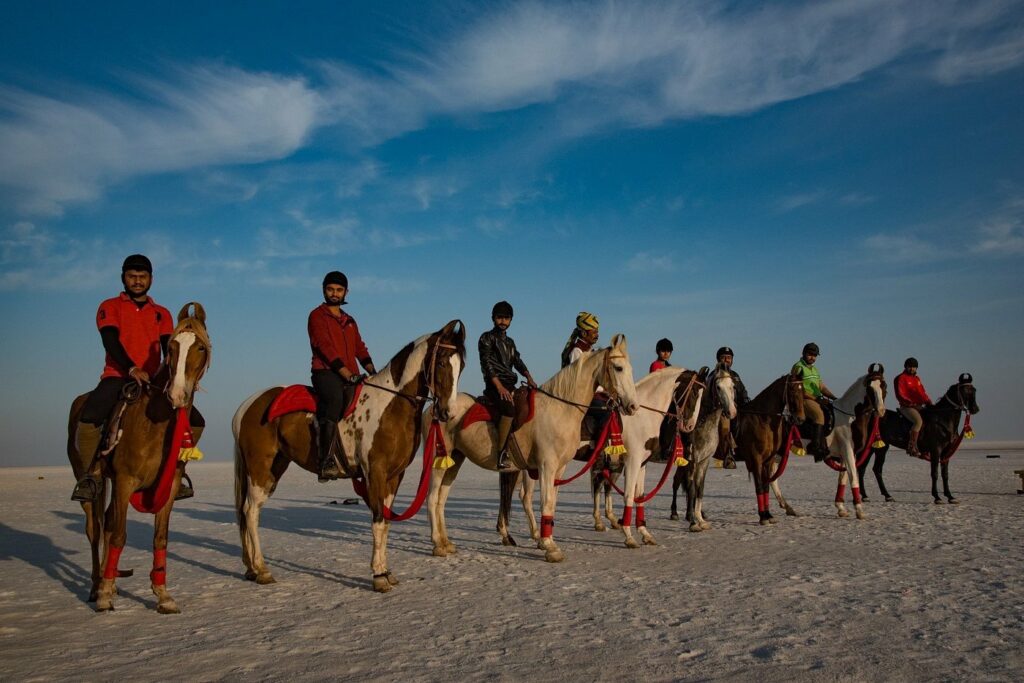
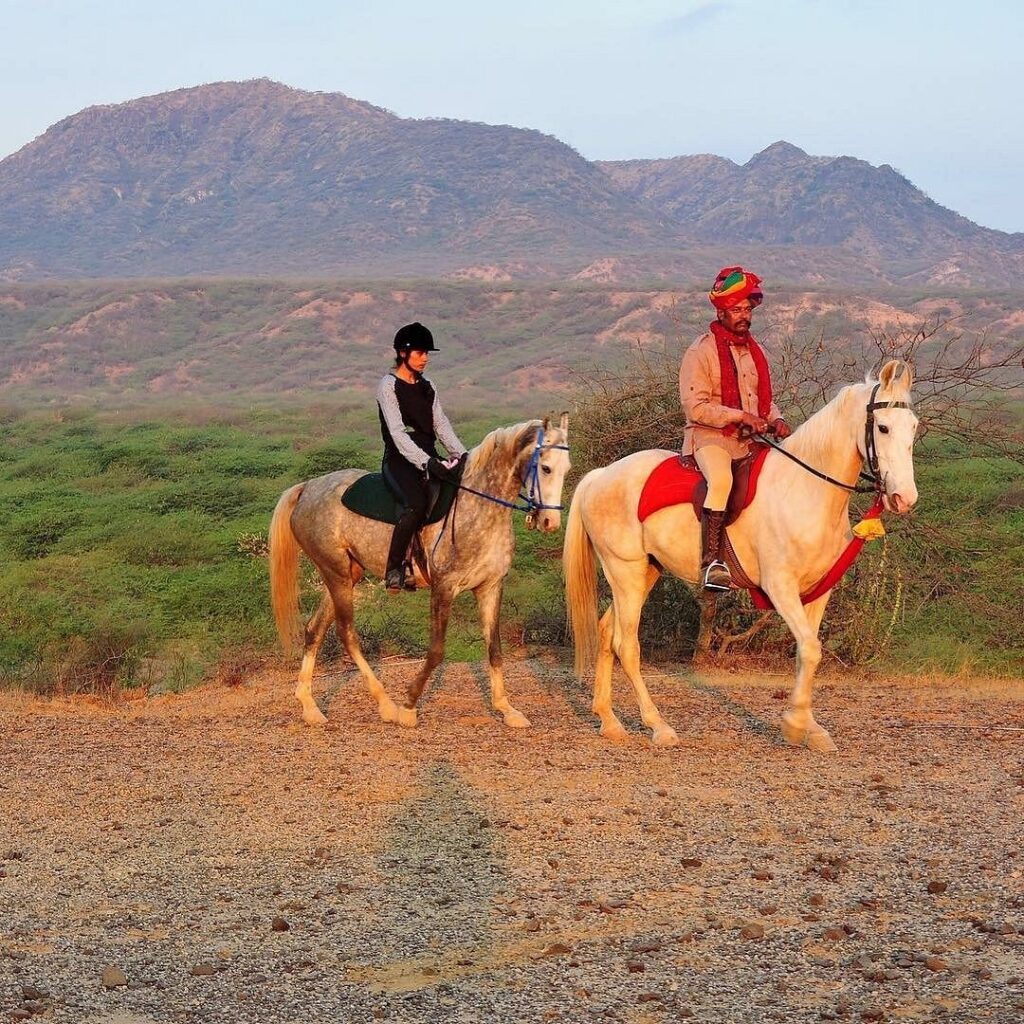
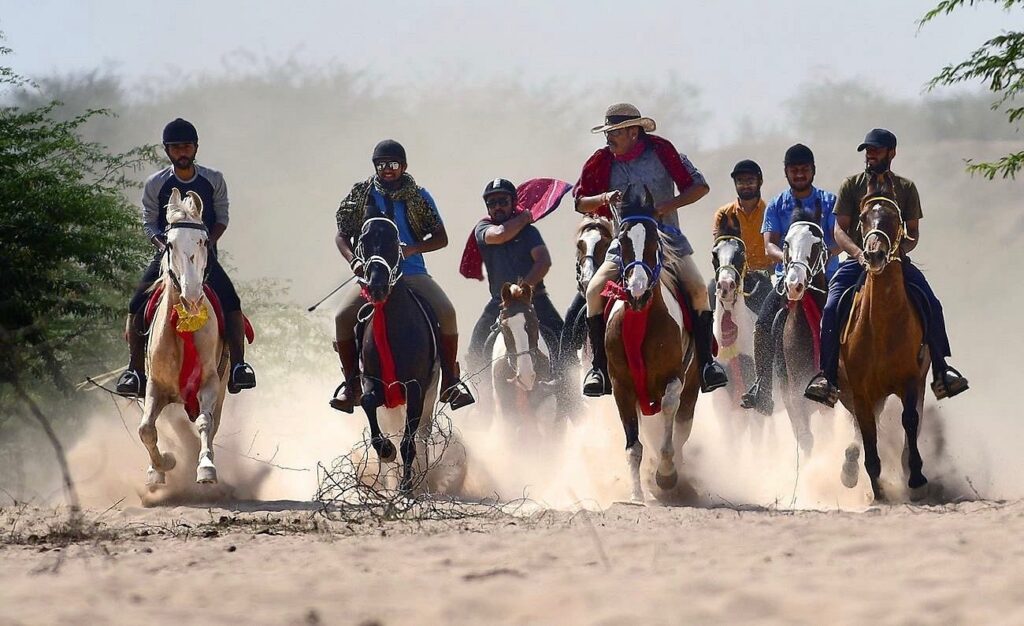

The Wild West of India; off the beaten track and largely unexplored by outsiders, Kutch is a treasure trove of ecological and historical wonders waiting to be discovered.
Stretching along the Tropic of Cancer, from Rajasthan to the Arabian Sea, Kutch covers more than 45,000 sq km and is one of India’s largest and most geographically distinct regions.
Distinguished by striking geological features, Kutch hosts a variety of unique ecosystems, from the seasonal wetlands and salt flats of the Rann, through large swathes of untouched grassland and open expanses of desert, to the lush tropical greenery and salty mangrove forests of the coast.
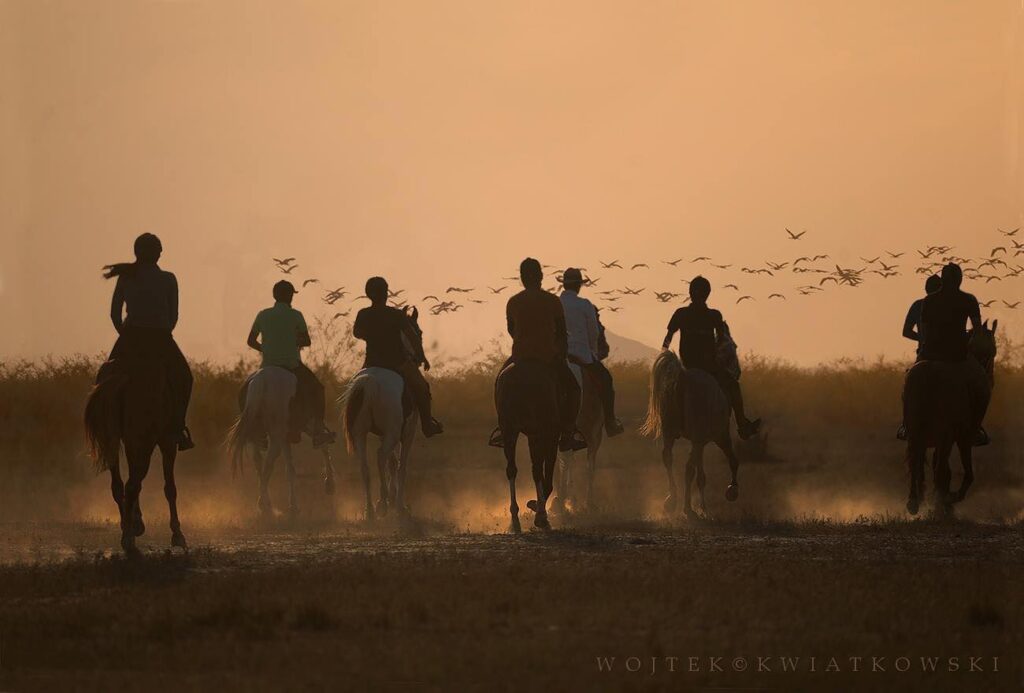
These breathtaking landscapes are home to a wide variety of species, from flamingos and swimming Kharai camels to the endangered Indian wolf and leopard, many of which are rarely seen elsewhere.
Evidence of human settlement here dates back to the stone age. At Dholavira, remains of one of the first great cities of the Harappan / Indus valley civilization can be found, dating back 5000 years.
From that time, the striking geography of Kutch has attracted a wide variety of settlers from different tribes and the attention of many great civilizations, from the Greeks of Bactria to the Mughal conquerors of Sindh, the tales of heroism and romance in Kutch are as vast and numerous as the grains of sand in the desert.
Eventually, the Rajput Jadeja dynasty seized control of Kutch, ruling for 438 years, from 1510 until the time of independence in 1948.
Each influx of tribes and ruling kingdoms has contributed to the rich tapestry of Kutchi culture, leaving a legacy of distinctive styles, architectural wonders and artisanal techniques passed down through the generations. Even today, Kutch is famous for its craft traditions, a land of creators working with wood, metal and cloth, weaving, dying and printing some of India’s finest textiles by hand, using methods passed down unchanged through hundreds of years.
Kutch is paradoxically a place where one can see the imprint of a range of distinct cultures from different eras, and yet, a place where it sometimes feels as though time has stood still, the peaceful rhythms of village life and the nomadic pastoral traditions of more than ten distinct tribal peoples continuing today just as they have done for hundreds of years before. One of the best rural tourism destinations in India, the simplicity and quietness found here is a striking contrast to the frenetic pace of modern urban life. Inspiring and humbling, Kutch is an amazing place to visit remote villages and tribes, learning from them and witnessing a completely different perspective on life.
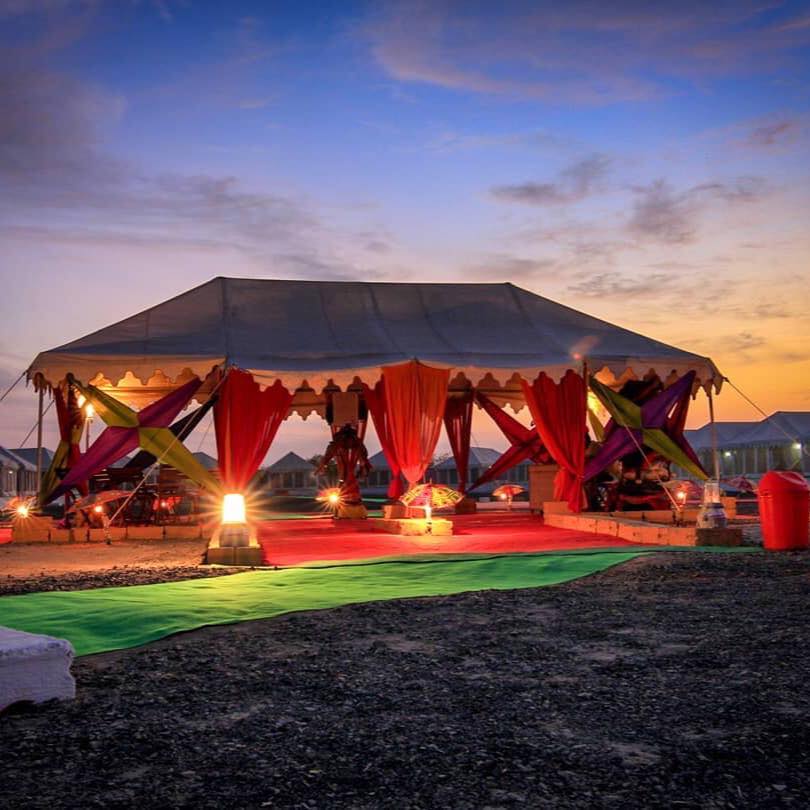
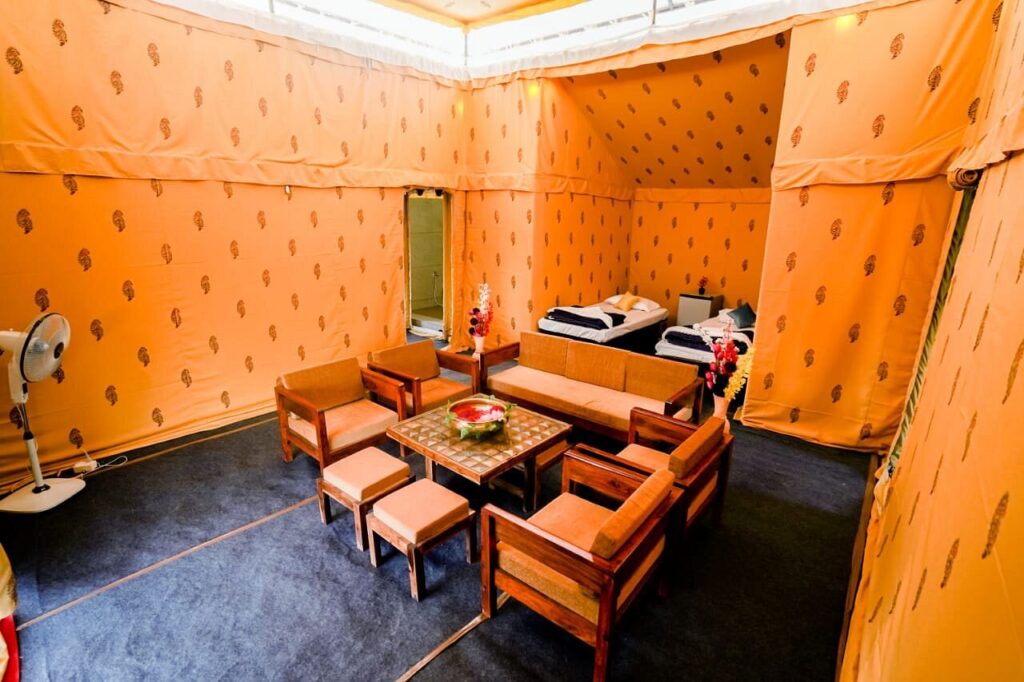
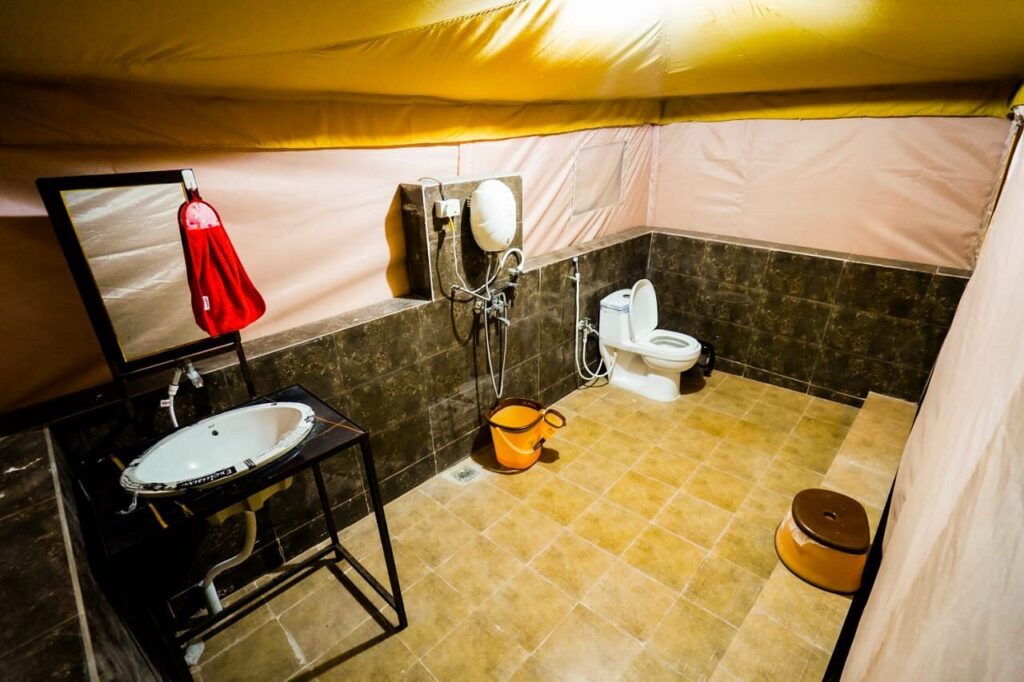
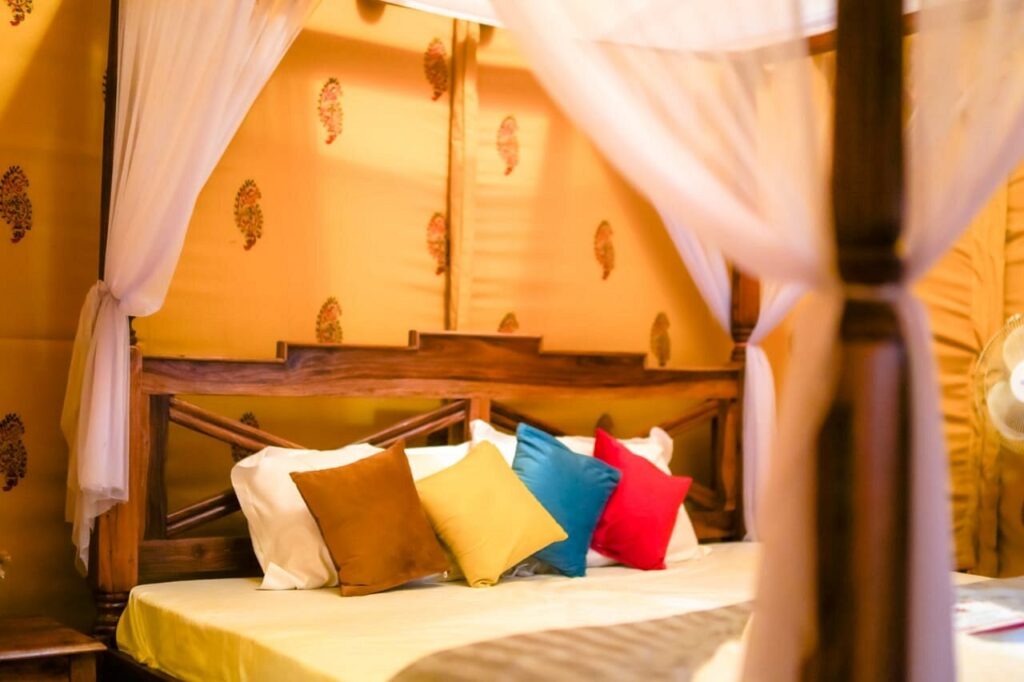
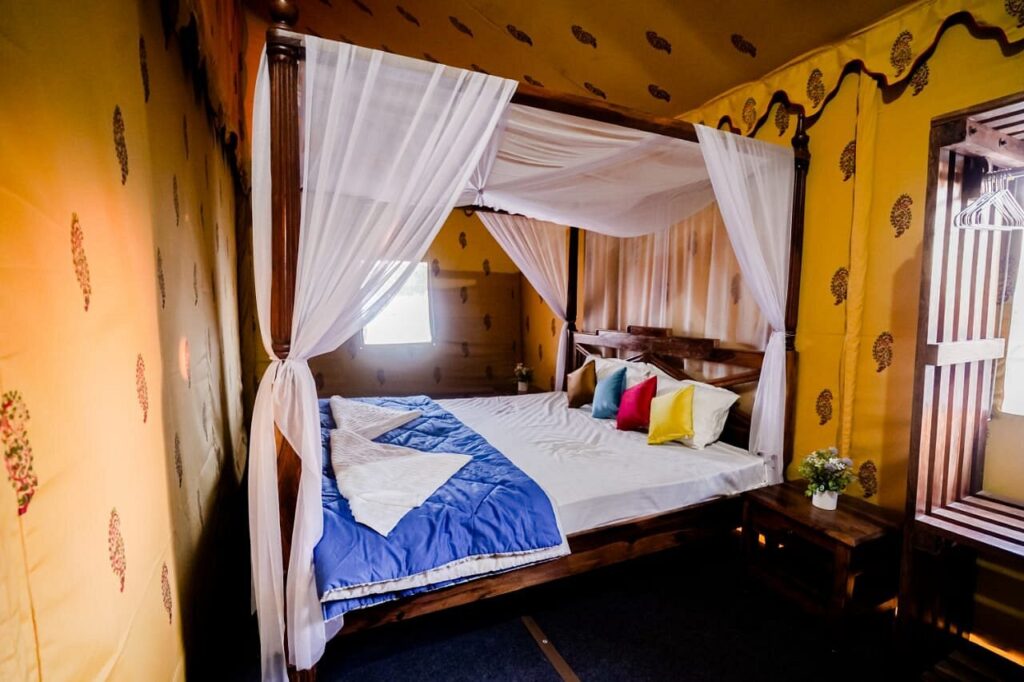
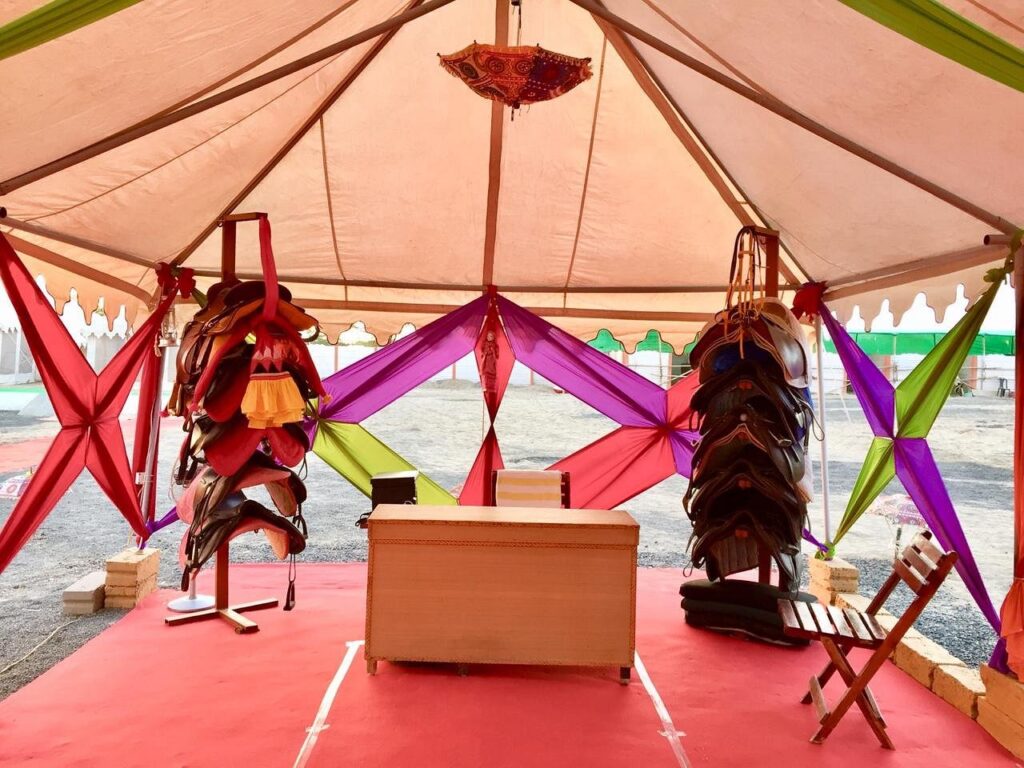
A mix of luxurious Heritage Castles and well-equiped spacious tents.
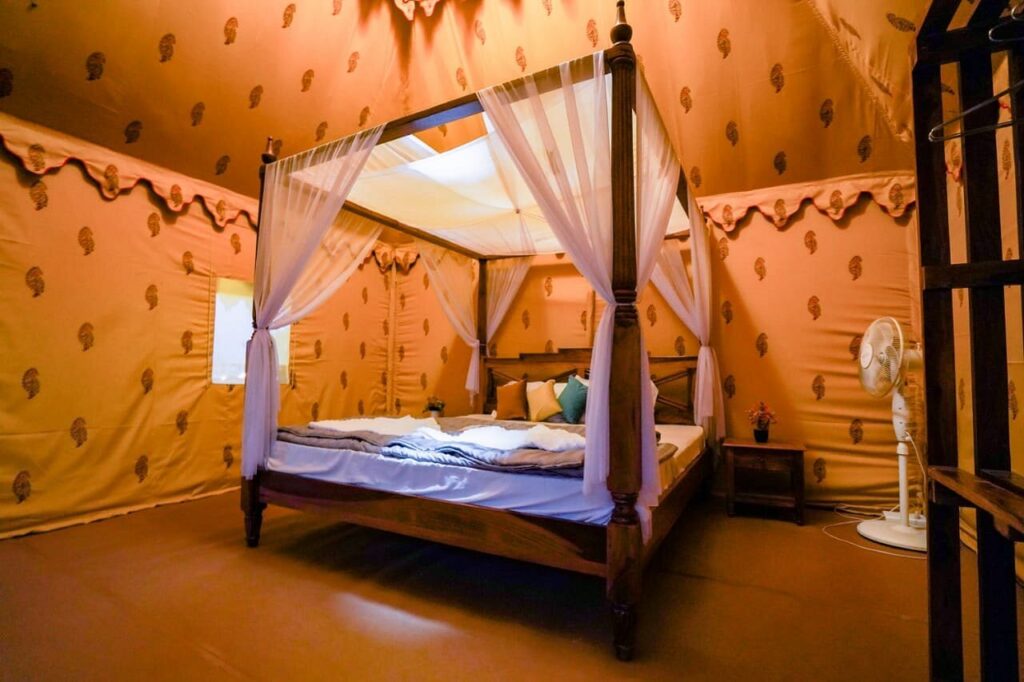
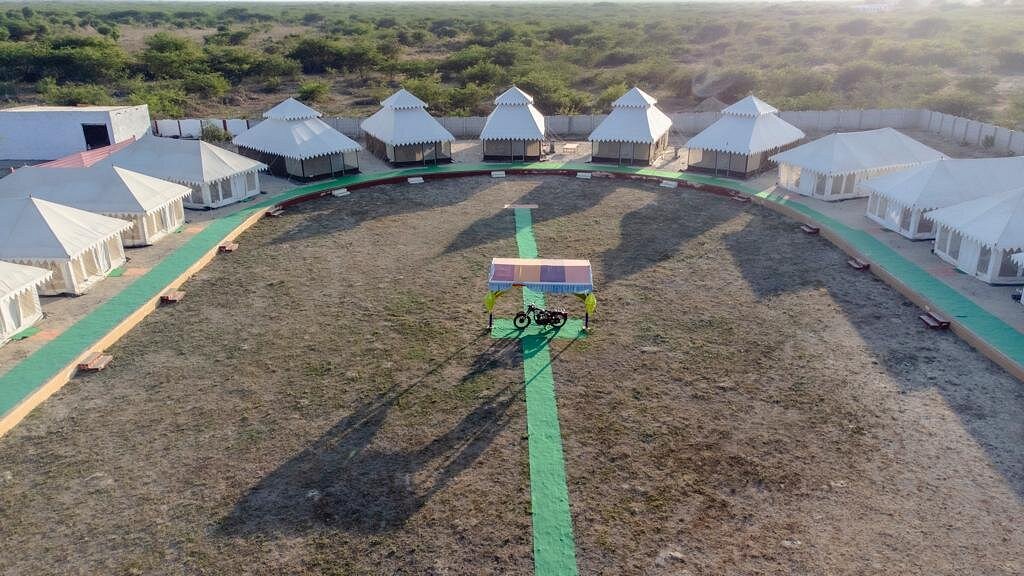
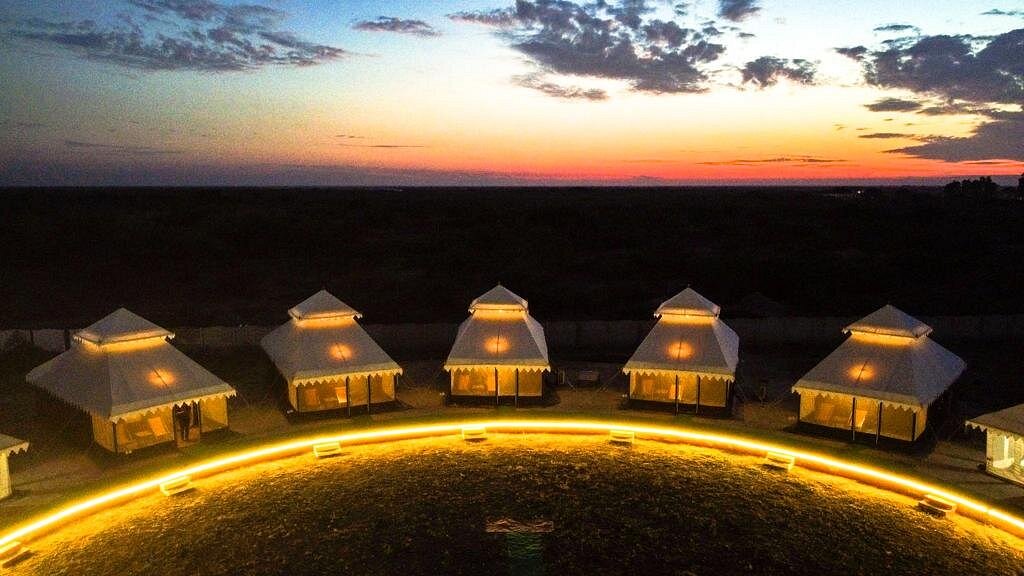
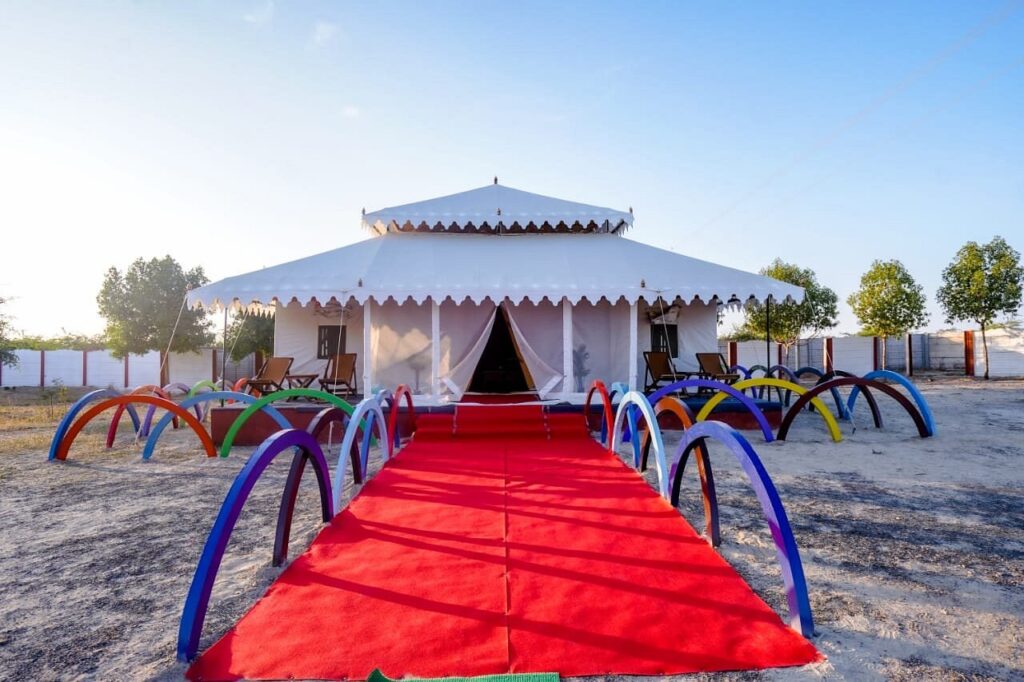
To ensure that you are well rested after your long haul flight, your first two nights will be spent at our luxury resort camp in the White Desert. Once your safari adventure begins, you will spend each night ‘glamping’ in comfortable Swiss tents which will be set up by our teams in carefully chosen locations prior to your arrival each day, along with two nights in heritage/resort properties..
In the evenings, you will enjoy cookouts and bonfire camps accompanied by local folk music and dance, along with some special evening events such as ‘Stargazing Night’. Of course, for those who crave solitude, you are always welcome to just rest and relax in the comfort of your tent or sit under the beautiful night sky and enjoy the silence of the wilderness.
Day 1 – Arrival Day
- Our representative will greet you at the airport and take you to KCRC Resort Camp in the White Desert.
- Upon reaching the resort you will be received with a royal welcome and shown to your accommodation.
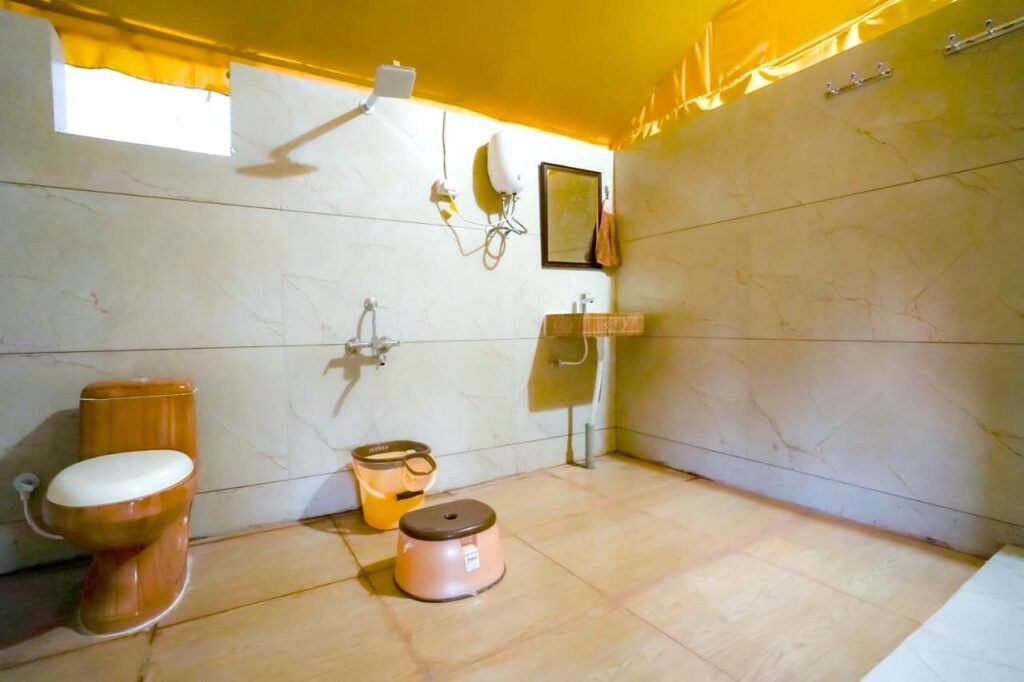
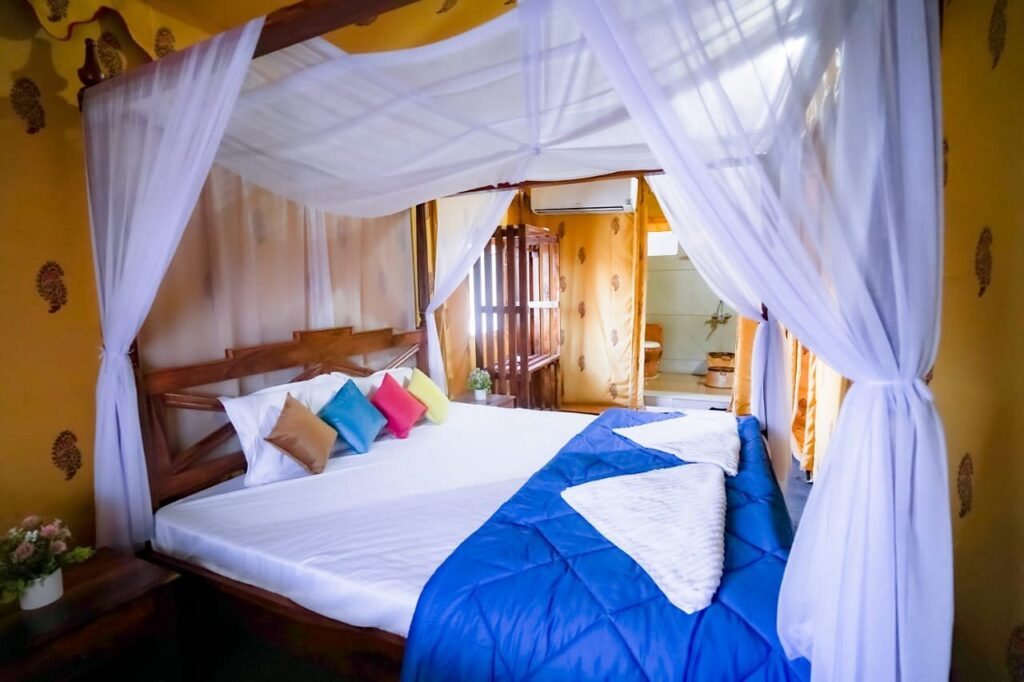
- Accommodation at the resort is in luxury Swiss tents with permanent fittings, so you can enjoy spacious, fully furnished tents with A/C, ensuite bathroom and hot showers.
- During the ride, accommodation is based on two people sharing but first two nights at the resort you can choose to stay your own private tent at no extra cost so you can totally relax and rest after your long flight.
- In the evening we will take the jeeps and head out into the White Desert, giving you your first glimpse of this unique and breathtaking landscape.
- We will watch the sunset over the salt flats and visit RannUtsav Festival, before returning to KCRC for dinner.
Day 2 – Ride Out
- Rising early, with tea or coffee served at your tent, you will find your horse prepped and ready, awaiting you in the half-light.
- We will take a short ride out into the White Desert, where we stop to watch the magnificent sunrise over this incredible landscape.
- Breakfast will be served here, at a stunning location out on the salt, a surreal and otherworldly dining experience to start the day.
- After breakfast, there will be time to explore this unique landscape and take some great photos before heading back to KCRC to freshen up and heading out in the jeeps.
- We will take the jeeps to visit Nirona village, famous for the workmanship of its traditional artisans.
- Perhaps the most famous traditional Nironais Rogan art, a unique and intricate form of freehand painting on textiles using natural dyes, made famous when Indian Prime Minister Modi gifted a Rogan art ‘Tree of Life’ to Barrack Obama on his official visit. Rogan art is a tradition which has been passed down through one single family in Nirona for over 300 years and can only be found here.
- In addition to Rogan art, we will visit traditional craftsmen working with leather, metal, and wood, giving you a glimpse of traditional village work which carries on now as it has for hundreds of years.
- Unlike the commercialized experiences of many ‘craft villages’ Nirona still retains its original charm. These are real craftsmen, working in their home studios without fanfare, using the same traditional techniques as their forefathers.
- From Nirona, we continue to the intriguing Fossil Park for lunch, then on to the hills of Dhinodar, where peacocks roam and leopards prowl…
- Dhinodar Hill is an inactive volcano with striking basalt rock formations, offering spectacular views across the ChhariDhandh wetlands towards the Rann, with a shrine at the top and the 12th century Hindu Than monastery at the bottom.
- The monastery itself is a fascinating, well-preserved site with many interesting stories and legends about its foundation and features.
- We will visit the monastery, watching the sunset before returning to KCRC for dinner.
Day 3
- We set off on our safari adventure, riding toward ChhariDandh Wetlands Reserve.
- Home to vast numbers of migratory birds, including flamingos, cranes, painted storks and spoonbills, amongst others, the wetlands and nearby grassland also attract chinkara (Indian gazelle), Nilgai, blackbucks (antelope), Indian wolf (rare), golden jackals, caracal, desert cats and desert foxes.
- The best time to watch the birds is at sunrise or sunset.
- Upon arrival at ChhariDhandh, the grooms will receive the horses while we explore the reserve by jeep, staying to enjoy the sunset, before heading to our overnight camp nearby for dinner.
***Stargazing Night***
- After dinner, we will head out into the desert with high powered telescopes and some astronomy experts from Stargazing India for a look at the stars.
- The Rann of Kutch is recognised as one of the best places to go stargazing, and our experts will help you to identify key features of the night sky, along with an explanation of their significance in both western and traditional Indian astronomy.
Day 4
- We will set off by jeep to visit Siyot caves; a series of five rock cut caves dating from the 1stcentury AD.
- The larger main cave was originally used as a Shiva temple, with additional smaller caves added as individual meditation cells sometime between the 1st and 6th century. The site has been used by both Buddhists and Hindu Shaivaites over the centuries.
- Here you will find no ticket office or tourist development. Just a beautiful, ancient piece of early history, carved into the landscape in such a way that it retains its original sense of peace and tranquillity almost 2000 years later.
- We will meet our horses at the caves, and ride on to Lakphat.
- An impressive sight, Lakphat is a fort town, surrounded by 7km of high walls, fortified by ramparts and round towers.
- Once a key trading port with 15,000 inhabitants connecting Gujarat with Sindh, its fortune changed when the 1819 earthquake altered the course of the Indus river to flow into the Arabian Sea further north.
- Lakphat lost its importance as a port and by 1850 all trade had gone, along with most of the inhabitants.
- Today Lakphat stands alone on the horizon like a fanciful mirage, rising where the sandy Kutch desert meets a salty inlet of the Arabian sea; a sparsely populated ghost town, where just 500 inhabitants live amongst the crumbling ruins of the ancient city with a magnificent fort surrounding them.
- We will arrive to Lakphat on time for lunch and stay camped here overnight, leaving the afternoon to explore the fort, followed by a sunset ride along the shore.
- The camping experience within Lakphat is wonderfully atmospheric; tents sheltered within the ancient fort walls, lantern light dancing on the old stone as we make our way to dinner, an al fresco feast, sharing our table with the ghosts of a glorious past.The camping experience within Lakphat is wonderfully atmospheric; tents sheltered within the ancient fort walls, lantern light dancing on the old stone as we make our way to dinner, an al fresco feast, sharing our table with the ghosts of a glorious past.
Day 5
- After breakfast we will take the jeeps to visit NaroyanSarovar, Koteswar and Mata no Madh, continuing to a meeting point where we will rejoin the horses and take lunch.
- From there we ride on to the historic village of Tera, where we will stay overnight in the fort.
- Tera was once an estate (jagir) given by the rulers of Kutch to their brethren. Tera Jagir consisted of 41 villages, and was one of the largest jagirs of Kutch, with the ruling family residing in Tera fort.
- The approach to Tera is quite striking, as we ride down a narrow strip of land between two of the three manmade lakes at the edge of Tera village.
- These interlinking lakes are a remarkable feat of ancient engineering, fed by canals carrying rainwater from up to 20km away which enters the first lake and is progressively filtered as it moves through to the third. Traditionally these lakes provided all the water needed by the inhabitants of the village, with one for drinking, one for animals to drink, and one for washing clothes and utensils. Even today, it is quite likely we will see herds of goats, sheep or buffalo drinking from the lake on the right, or the ladies of the village washing clothes to the left.
- In contrast to the vastness of Lakphat, camp at Tera fort is a much more intimate setting. Here the village lies outside the castle gates, while only the ruling family lived within the fort. Similarly, when we settle into camp we will light a fire, close the gates and have the fort all to ourselves for the night.
Day 6
- Today we ride to Devpar, stopping for lunch along the way.
- Our accommodation will be at a beautiful heritage property in Devpar, once a small palace, now a boutique hotel. We usually have this property to ourselves.
- Upon arrival, the grooms receive the horses while you settle in to the hotel, relaxing in the courtyard, taking in the beautiful features of this 110 year old haveli.
- Dinner will be served in the courtyard.
- The kitchen at Devpur serves delicious, home cooked Kutchi meals, and a cooking demonstration can be arranged for interested guests.
Day 7
- Turning south from Devpur, we ride to Roha.
- Roha was once the leading jagir of kutch, ruling 52 villages, and is situated in a stunning location, covering 16 acres on a hilltop 800ft above sea level.
- We will explore the fort and take lunch here before taking the jeeps to visit ChavdaRakhal.
- ChavdaRakhal is a pristine, dense forest reserve, still owned by the royal family of Kutch.
- There is a lake at its centre, home to over 300 crocodiles, surrounded by a dense forest of ancient teak, banyan, babool and numerous other trees and herbs, where Nilgai and leopards are found.
- We will explore ChavdaRakhal by jeep and continue to the overnight camp for dinner.
- The horses will meet us at camp.
Day 8
- Today the landscape becomes greener and more lush, leaving desert behind as palm trees appear alongside small farms growing kesarmangos and dates, salt on the wind as we approach the shore.
- We finish our ride with an exhilarating gallop along the water’s edge at Mandhvi, a beautiful 7km stretch of white sand beach.
- There is nothing quite like plunging into the ocean after 8 days in the saddle, and the horses love it too!
- We remove the saddles so you can stroll along the shore bareback, cooling the horses’ legs in the waves.
- When you are ready, the grooms will receive the horses.
- Our accommodation tonight will be at a beautiful beachside resort.
- We will show you to your accommodation and give you an hour or two to relax, swim and enjoy the beach before lunch.
- After lunch, we take a stroll up the beach to Vijay Vilas Palace.
- Built of red sandstone, the palace is a beautiful example of Rajput architecture and has been used as the setting for many Bollywood movies. Once the summer resort of the Maharao, the royal family now of Kutch now reside here permanently.
- After visiting the royal neighbours, we will return to the resort.
- There will be an optional sunset beach ride, for those who would like, before we reconvene at the resort for a grand farewell dinner.
Day 9 – Departure day
- Optional morning activities can be arranged for guests with a later departure time.
- Transfers to Bhuj will be organised based on suitable timing for your onward travel plans.
- 28 December 2025 – 05 January 2026: New Year's Eve Saddle Journey
- 10 January 2026 – 18 January 2026: Kite Festival and Runn Utsav Ride
- 25 January 2026 – 02 February 2026: Indian Republic Ride Retreat
- 08 February 2026 – 16 February 2026: Valentine's Ride FULL
- 21 February 2026 – 01 March 2026: Season Final – Warrior Path FULL
Local English-speaking team
Kutch, Gujarat, India
One highlight of our camps has been the food. During the safaris, you are accompanied by chefs from Rajasthan who will cook the most delicious, hearty dishes to keep you fueled throughout the day. Our team will ensure that the chefs reach well in time at the campsite before your arrival at each location. If you have any special dietary restrictions (allergies, vegan, gluten-free etc) please let us know and we will accommodate your needs.
You may have heard that Gujarat is one of India’s ‘dry’ states, prohibiting sale of alcohol to local residents.
Rest assured this restriction does not apply to visitors and you can freely enjoy beer/wine/spirits during your stay.
Transfer from & to airport or railway station, accomodation, guided riding program and sightseeing tour, food, trail equipment and horse rental included
Travelling and cancelation insurance, airflight, visa, tips, alcohol drinks and personal expenses not included
Book the flight to Bhuj airport, Gujarat, Domestic airport or Bhuj train station. All rides include round-trip transfers from Bhuj airport or railway station. These are arranged and managed by our team to ensure a smooth arrival and departure experience. Bhuj airport is well connected by Ahmedabad & Mumbai international airports. Bhuj Raileay station is well connected to all country railwaystations.
Company standard terms applied.